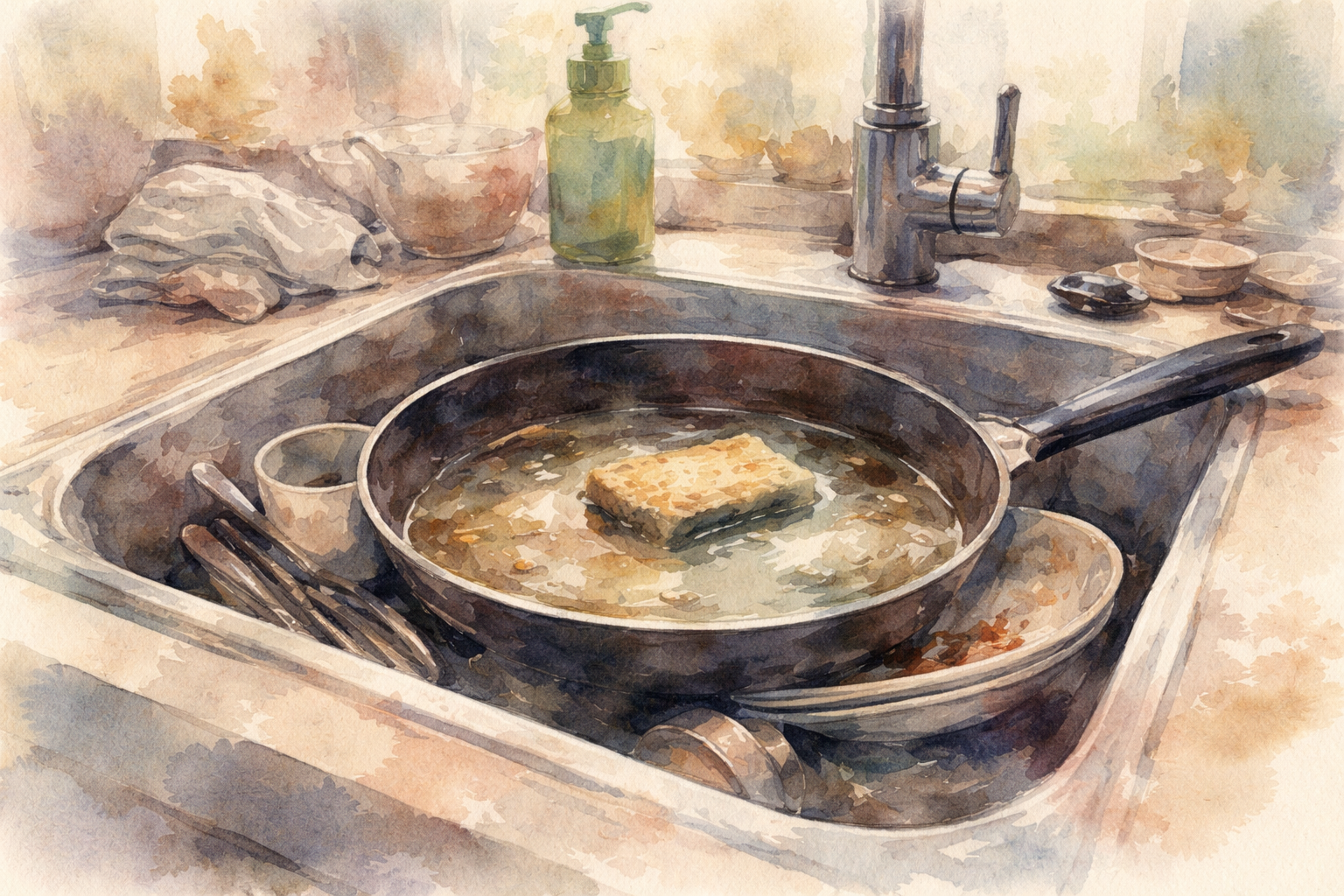
Living with other people is brilliant – until someone leaves a pan “soaking” for three days. Arguments about chores are the number-one source of tension in shared households, yet most of us never sit down and agree on a system. We just hope everyone will pull their weight.
Hope is not a strategy. Here are five rules that actually work.
1. Make the invisible visible
Half the friction in a shared home comes from tasks nobody notices. Wiping down surfaces, replacing the bin liner, buying toilet roll – these micro-chores add up, and the person doing them quietly builds resentment.
Fix: Keep a shared list of every recurring task, no matter how small. When people can see the work, they’re far more likely to share it.
2. Rotate, don’t volunteer
“Who wants to clean the bathroom?” is a question that gets answered by the same person every time. Volunteering systems reward conscientiousness and punish it simultaneously.
Fix: Assign tasks on a rotation – weekly or fortnightly. When it’s your turn, it’s your turn. No negotiation, no guilt.
3. Set a “done” standard
“I cleaned the kitchen” can mean anything from a Michelin-star-ready workspace to “I moved my plate to the sink.” Mismatched expectations cause more arguments than laziness.
Fix: Agree on what “done” looks like for each task. A two-sentence description is enough. “Kitchen clean = surfaces wiped, dishes in dishwasher, bins not overflowing.”
4. Track contributions without scorekeeping
There’s a difference between fair accountability and obsessive scorekeeping. You want a lightweight system that shows balance over time – not a courtroom exhibit.
Fix: Use a simple points or time-based tracker. If everyone can see that contributions are roughly equal over a month, trust builds naturally.
5. Talk about money the same way
Chores and expenses are two sides of the same coin. If one person always buys the cleaning supplies or pays for shared groceries without a system, resentment follows.
Fix: Log shared expenses and settle up regularly. Transparency removes suspicion.
These aren’t revolutionary ideas – they’re common sense that most households never formalise. The hard part isn’t knowing what to do; it’s building the habit.
That’s exactly why we built kokuko: to make these rules effortless. A shared dashboard, automatic rotation, fairness tracking, and expense splitting – all in one place. No spreadsheets, no group-chat arguments, no passive-aggressive sticky notes.
Join the waitlist and be among the first to try it.